
Looking to upgrade your cable modem? In this comparison of the Arris S33 vs Motorola MB8611, we’ll help you decide which one is right for you. Both modems support multi-gigabit speeds and offer similar performance for current DOCSIS 3.1 plans up to around 2.5 Gbps through their 2.5GbE ports.
The Arris S33 features a more compact design and an extra Ethernet port, while the Motorola MB8611 includes lightning/surge protection. We’ll cover speed, ports, design, setup, compatibility (including mid-split/Next‑Gen uploads), price, and more so you can pick the best fit for your home.
Quick Verdict
If you want the simplest pick for a single router and multi‑gig plans up to 2.5 Gbps, either modem works well. The MB8611 adds built‑in surge protection.
If you’re eyeing the S33 for its two Ethernet ports, note that only one port is active by default. Using both ports at once generally requires a second public IP from your ISP. Otherwise, connect your router to the 2.5GbE port for best results.
Uploads and future tiers: In areas with Xfinity mid‑split/Next‑Gen uploads, check the current approved list; neither S33 nor MB8611 is approved for those higher upload tiers. Also, these are DOCSIS 3.1 modems—not DOCSIS 4.0—so they won’t deliver new symmetrical multi‑gig tiers rolling out on DOCSIS 4.0.


Arris S33 vs Motorola MB8611
Ports and Connectivity: The ARRIS S33 has two Ethernet ports (1 x 2.5G + 1G). Important: only one is active by default; using both typically requires a second public IP from your ISP. The MB8611 has a single 2.5G port.
Speed and Performance: Both are best suited for plans up to 2.5 Gbps due to their single 2.5GbE port. Higher ‘3.5–6 Gbps’ figures are theoretical for aggregate DOCSIS throughput, not single-device speeds.
Memory: Manufacturers don’t publish RAM specs for these models; avoid relying on unofficial numbers.
Price: Typical pricing is very similar; the MB8611 is often listed at about $199.99 and the S33 commonly retails around $199–$210, with promotions varying by retailer.
Additional Notes: The MB8611 includes lightning/surge protection. For gaming, latency is largely determined by your network/ISP and router QoS rather than the modem model.
ISP Compatibility: Both work with major U.S. cable ISPs (Xfinity, Spectrum, Cox) for standard DOCSIS 3.1 tiers. In Canada, Rogers generally supplies its own gateway hardware for retail accounts; BYO modems aren’t supported like in the U.S.

ARRIS Surfboard S33 DOCSIS 3.1 Multi-Gigabit Cable Modem | Approved for Comcast Xfinity, Cox, Spectrum & More | 1 &...
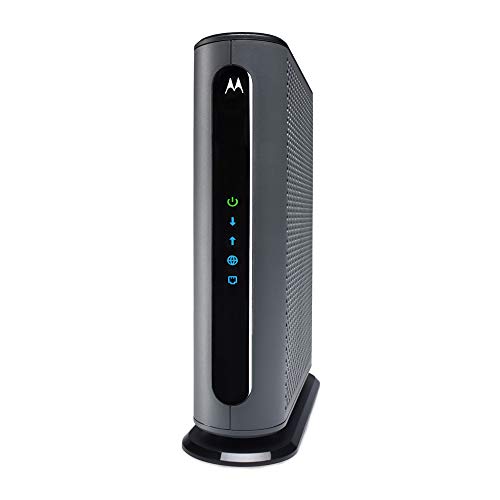
Motorola MB8611 DOCSIS 3.1 Multi-Gig Cable Modem | Pairs with Any WiFi Router | Approved for Comcast Xfinity, Cox...
as of September 1, 2026 6:22 pm
as of September 1, 2026 6:22 pm


Overview of the Arris S33 and Motorola MB8611
The Arris S33 and Motorola MB8611 are both DOCSIS 3.1 cable modems capable of delivering multi‑gigabit speeds versus older DOCSIS 3.0 models. Key features and specs:
Arris S33
- Best for plans up to 2.5 Gbps (single 2.5GbE device throughput)
- 32 x 8 channel bonding
- 2 ports – 1 Gigabit Ethernet, 1 2.5G Multi‑Gig Ethernet (only one active unless your ISP provides multiple IPs)
- Compact curved design
- Single status light on the front
Motorola MB8611
- Best for plans up to 2.5 Gbps (single 2.5GbE device throughput)
- 32 x 8 channel bonding
- 1 port – 2.5G Multi‑Gig Ethernet
- Tower design
- 5 status lights on front
Both modems use Broadcom silicon and work with major U.S. cable providers like Comcast Xfinity, Spectrum, and Cox on standard DOCSIS 3.1 tiers.
Check out individual in-depth reviews of ARRIS S33 and Motorola MB8611 below:
- In-Depth Arris S33 Review: Is It Your Next Modem?
- Motorola MB8611 Cable Modem Review: Specs & Ratings
Speed Comparison
Both the S33 and MB8611 support multi‑gigabit download speeds with 32 downstream and 8 upstream channels, but practical single‑device throughput is limited by their 2.5GbE ports. Treat both as ideal for plans up to 2.5 Gbps; higher advertised DOCSIS figures (e.g., 3.5–6 Gbps) describe aggregate capacity and won’t reach one Ethernet device.
Upload performance varies by ISP and market. In Xfinity mid‑split/Next‑Gen upload areas, higher uploads require specific approved modems, and the S33/MB8611 aren’t on that list. Always check your provider’s current approved device list for upload eligibility.
Winner: Tie – For standard DOCSIS 3.1 tiers up to ~2.5 Gbps, real‑world speeds are effectively the same.
Ports and Connections
Here’s the key design difference.
The Arris S33 has two Ethernet ports (2.5GbE + 1GbE). By default, only one port passes traffic. Using both simultaneously generally requires your ISP to provision a second public IP. If you don’t have multiple IPs, connect your router to the 2.5GbE port.
The Motorola MB8611 has a single 2.5GbE port, which is sufficient for connecting your router.
Winner: Arris S33 for flexibility if your ISP supports multiple IPs; otherwise both function the same for a single router.
Design and Hardware
The Arris S33 features a compact, curved white case with a single front LED. The Motorola MB8611 uses a taller, black tower design with five status LEDs and includes lightning/surge protection circuitry. Both have ample ventilation and a small footprint.
Winner: Draw. Choose based on aesthetics and status‑light preferences.
Ease of Setup
Installing either modem is straightforward.
The process is essentially the same for both modems:
- Connect coaxial cable from the wall outlet to the modem’s coax connector.
- Connect an Ethernet cable from the modem to your router’s WAN port (use the 2.5GbE port if available).
- Plug in power and wait for the status lights to stabilize.
- Activate through your ISP’s app or web portal (many providers support app-based self‑activation); phone support is a fallback.
Winner: Draw. Setup is quick and nearly identical.
Compatibility
Both modems work with major U.S. cable ISPs (Xfinity, Spectrum, Cox) for standard DOCSIS 3.1 tiers. In markets where Xfinity offers mid‑split/Next‑Gen upload upgrades, confirm that your modem is on the current approved list—S33/MB8611 are not on that list as of this writing. In Canada, Rogers typically supplies its own gateway; bringing your own retail modem is not supported on standard consumer plans (you can use bridge mode if you prefer your own router).
Winner: Draw for standard tiers; check your ISP’s approved list for higher upload eligibility.
Security
These are modem‑only devices. They don’t include a router, Wi‑Fi, or firewall features. On the coax link, DOCSIS BPI+ provides encryption between your modem and the cable provider’s CMTS. For firewalling, NAT, and threat protection, use a separate router or gateway.
Winner: Draw. Pair either with a quality router for network security features.
Price Comparison
Pricing fluctuates with promotions, but recent retail shows the Motorola MB8611 commonly listed at $199.99 on Motorola’s site, while the Arris S33 typically retails around $199–$210 at major stores. Street prices can vary week to week.
Owning your modem still saves on rental fees over time.
Winner: Draw – pricing is usually very close; choose based on ports and compatibility needs.
Final Verdict: Both Are Excellent Multi-Gig Cable Modems
Both modems are excellent for current DOCSIS 3.1 plans up to 2.5 Gbps and offer an easy setup experience.
- Single‑device throughput up to 2.5 Gbps via 2.5GbE
- Easy self‑activation with most providers
- Work with major U.S. cable ISPs on standard tiers
Key considerations: the Arris S33 offers two Ethernet ports, but the second port typically requires a second public IP to be usable. The MB8611 includes surge protection. Neither device is DOCSIS 4.0, so they won’t deliver new symmetrical multi‑gig tiers rolling out on DOCSIS 4.0 networks.
In summary:
- Motorola MB8611 – Great all‑around DOCSIS 3.1 modem for up to 2.5 Gbps plans; includes surge protection.
- Arris S33 – Best if you need the option of dual Ethernet ports and your ISP offers multiple IPs; otherwise treat it as a single‑port 2.5GbE modem.
Frequently Asked Questions
Which is better for gaming, the Arris S33 or Motorola MB8611?
Latency is primarily influenced by your ISP path and your router’s QoS. Both modems perform similarly for gaming on healthy DOCSIS 3.1 networks. Pair either with a quality router that supports QoS for best results.
What internet speeds do these modems actually support?
Each modem has a 2.5GbE LAN port, so plan for single‑device throughput up to about 2.5 Gbps when your ISP offers it. Higher theoretical DOCSIS figures don’t translate to one Ethernet device.
Do these modems work with satellite providers like DISH or DIRECTV?
No. These are DOCSIS cable modems and work on coax‑based cable networks. Satellite and fiber services use different equipment.
What routers should I use with these DOCSIS 3.1 modems?
To fully benefit from multi‑gig plans, use a router or mesh system with a 2.5GbE WAN port. Older Gigabit‑only routers will cap speeds around 1 Gbps.
Can I use both ports on the Arris S33 at the same time?
Usually no—only one port is active by default. To use both simultaneously, most ISPs require purchasing a second public IP address. Otherwise, plug your router into the 2.5GbE port.
Are the S33 and MB8611 compatible with Xfinity Next‑Gen uploads?
No. As of now, they’re not on Xfinity’s Next‑Gen upload approved list. If higher uploads are important, check Xfinity’s current compatible device list before buying.
Are these modems “future‑proof” now that DOCSIS 4.0 is rolling out?
They’re excellent DOCSIS 3.1 choices, but they’re not DOCSIS 4.0 devices. For new symmetric multi‑gig tiers on DOCSIS 4.0 networks, you’ll need compatible hardware.
How should I activate my new modem?
Most major ISPs support app or web self‑activation (e.g., Xfinity app or activation portal). If that’s unavailable or fails, contact support to complete activation.

- Best WiFi 7 Mesh Systems (2026) — Tested & Ranked for Multi-Gig Homes - April 28, 2026
- Best Routers for Verizon FiOS (2026) — WiFi 7 & Mesh Picks Tested - April 13, 2026
- Best 2.5GbE Switches for Home Lab (2026) — Tested & Verified - April 8, 2026