
Affiliate disclosure: As an Amazon Associate, I earn from qualifying purchases.
For most one-bedroom flats, buy the TP-Link Archer AX55: Wi-Fi 6, four Gigabit ports, and the least money that still does the job. Pick the eero 6 if you want the simplest setup, the Linksys Hydra 6 if your flat has a long corridor, and the NETGEAR RAXE500 only if your devices support the 6 GHz band.
This guide compares the ten routers I would actually put in a flat, on range, speed, Wi-Fi generation and the security features that matter when neighbours share the airwaves.
Whether you need a basic model like the TP-Link AX3000 or something more powerful like the NETGEAR Nighthawk AX5400, there’s a router out there for everyone. Find the ideal one to make sure your streaming, gaming, and browsing are smooth and interruption-free. Let’s help you pick the best router for a great online experience.
Best Routers for Apartments: Top 10 Compared
All ten routers side by side: ports, coverage, speed class, and what each one is best at in a flat.
| Router | Image | Best for | Class | Ports | Security | Price | Full analysis |
|---|---|---|---|---|---|---|---|
| TP-Link Archer AX55 (AX3000) | 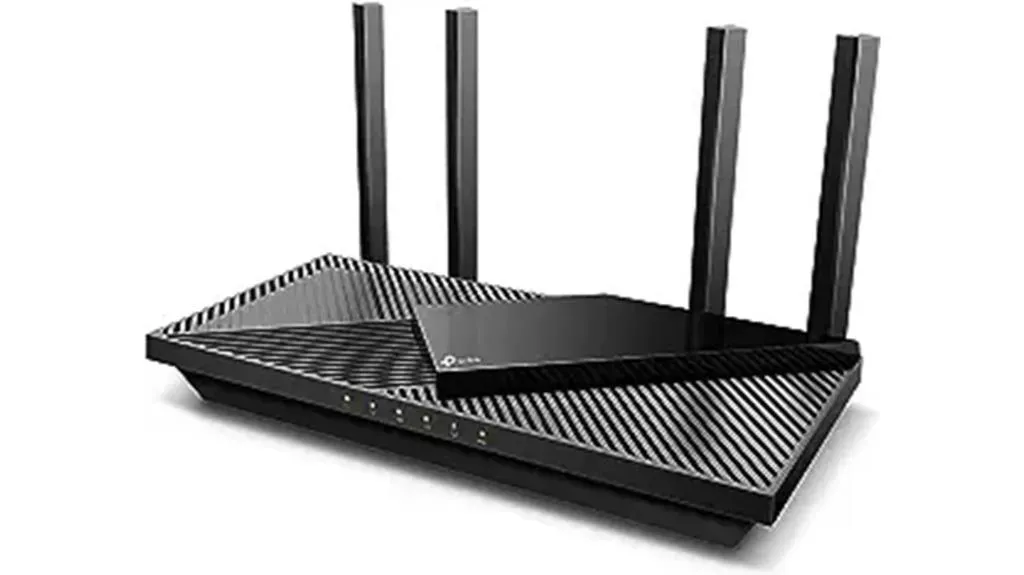 | Best Value | Class: AX3000 (Wi-Fi 6) | Ports: 1 WAN + 4 LAN | Security: WPA3 + HomeShield | VIEW LATEST PRICE | Read Our Analysis |
| NETGEAR Nighthawk RAX50 (AX5400) | 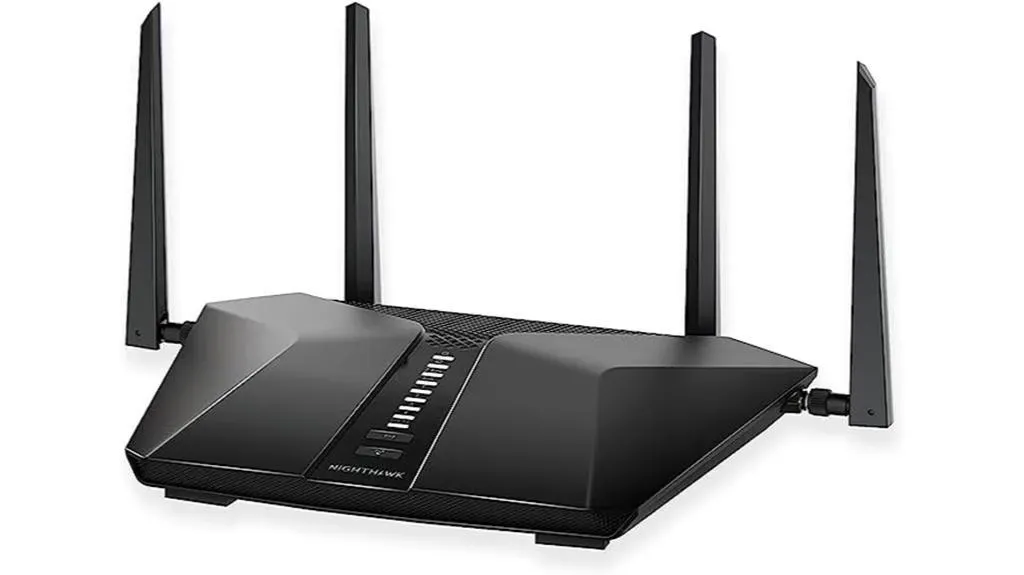 | Most Wired Ports | Class: AX5400 (Wi-Fi 6) | Ports: 1 WAN + 4 LAN | Security: WPA3 + Armor | VIEW LATEST PRICE | Read Our Analysis |
| TP-Link Archer AX21 (AX1800) | 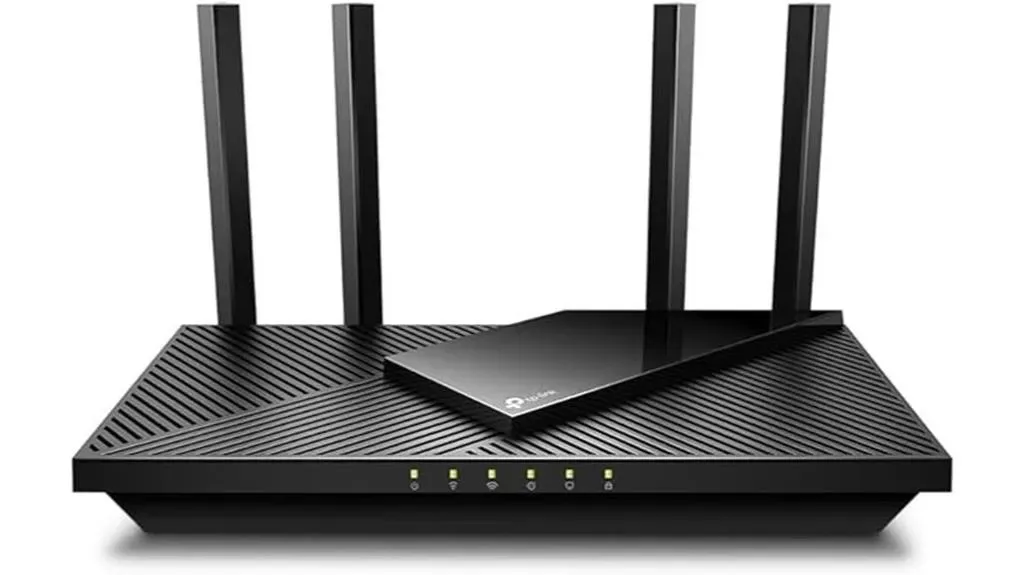 | Budget Pick | Class: AX1800 (Wi-Fi 6) | Ports: 1 WAN + 4 LAN | Security: WPA3 | VIEW LATEST PRICE | Read Our Analysis |
| Linksys Hydra 6 Mesh (MR20EC) | 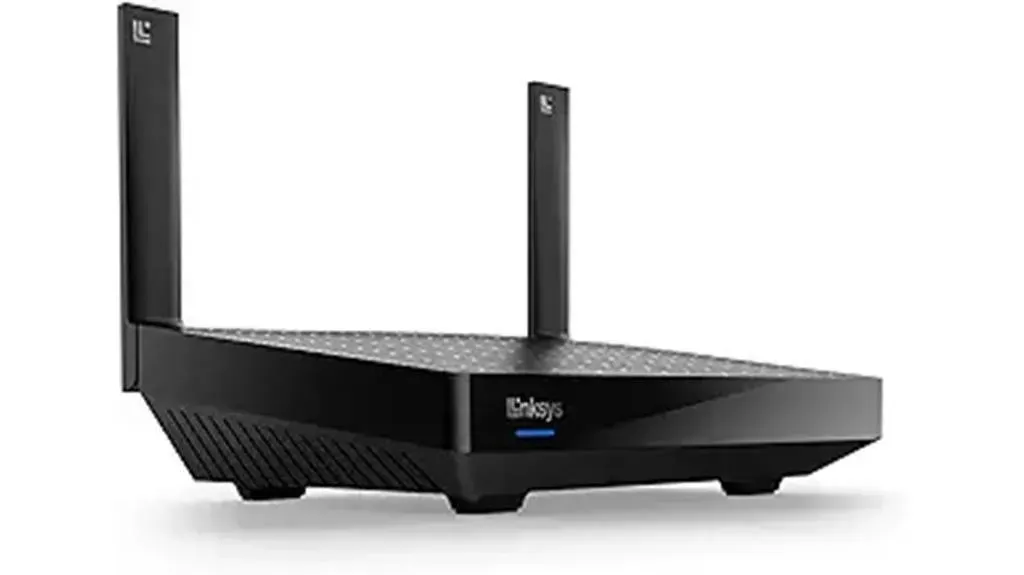 | Mesh-Ready | Class: AX3000 (Wi-Fi 6) | Ports: 1 WAN + 4 LAN | Mesh: Intelligent Mesh | VIEW LATEST PRICE | Read Our Analysis |
| Amazon eero 6 (single unit) | 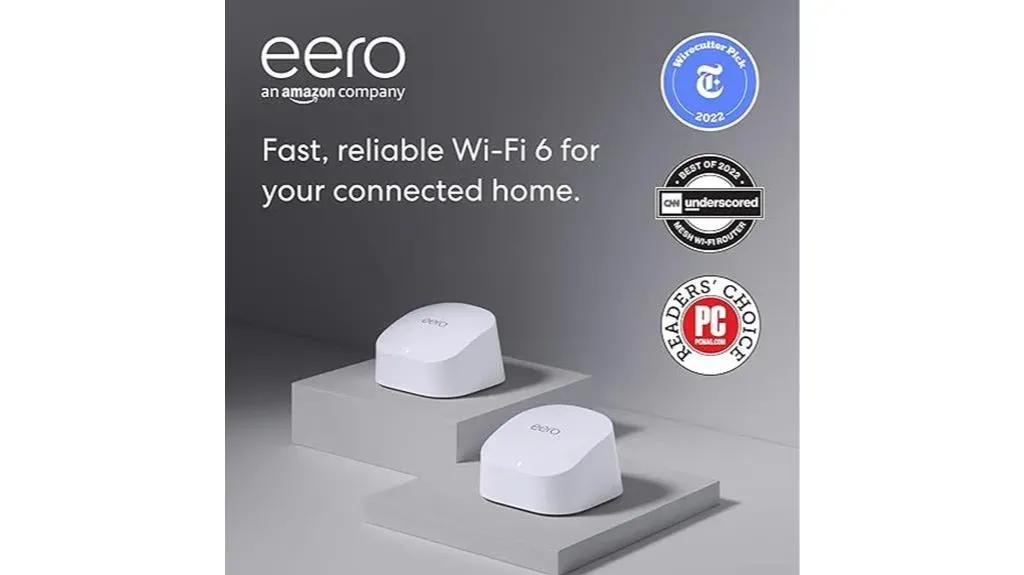 | Easiest Setup | Class: Wi-Fi 6 mesh | Coverage: 1,500 sq ft per unit | Ports: 2 Ethernet | VIEW LATEST PRICE | Read Our Analysis |
| ASUS ROG Rapture GT-AX11000 | 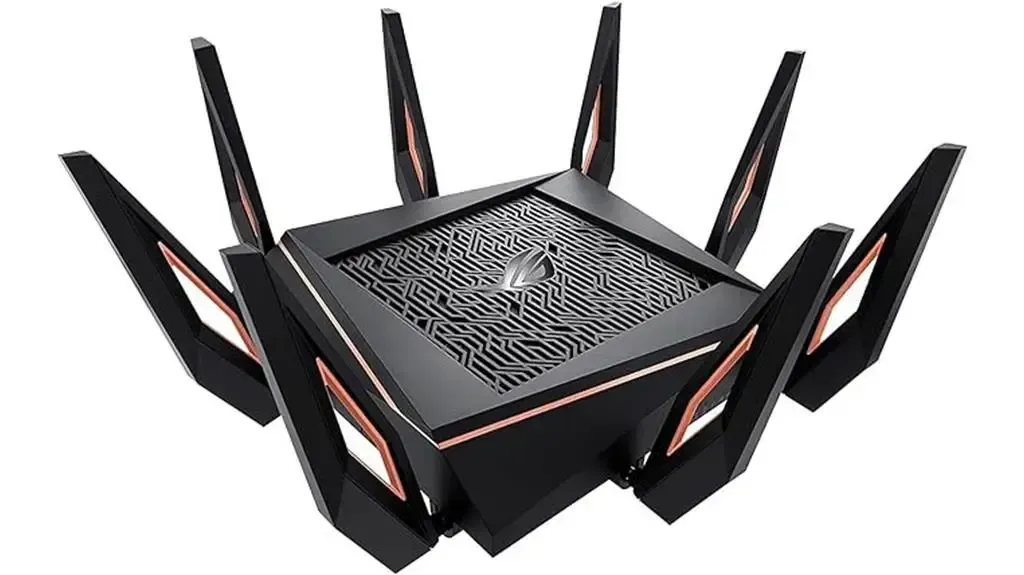 | Gaming | Class: AX11000 (Wi-Fi 6) | Ports: 1 WAN + 4 LAN + 2.5G | Mesh: AiMesh | VIEW LATEST PRICE | Read Our Analysis |
| ARRIS Surfboard G34 (modem + router) | 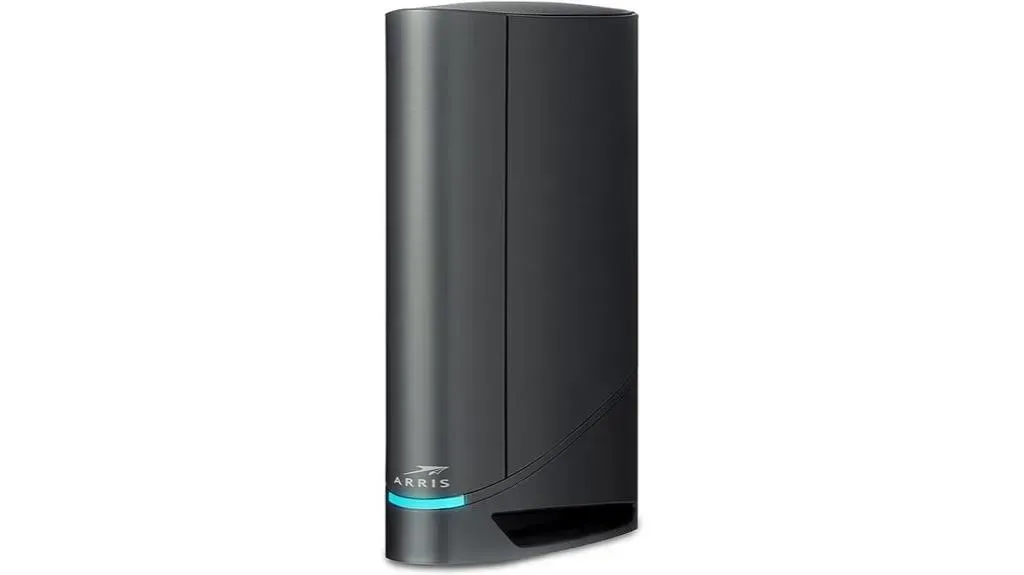 | Modem + Router | Type: DOCSIS 3.1 + Wi-Fi 6 | Ports: 4 Gigabit | Class: AX3000 | VIEW LATEST PRICE | Read Our Analysis |
| ASUS RT-AX88U PRO (AX6000) | 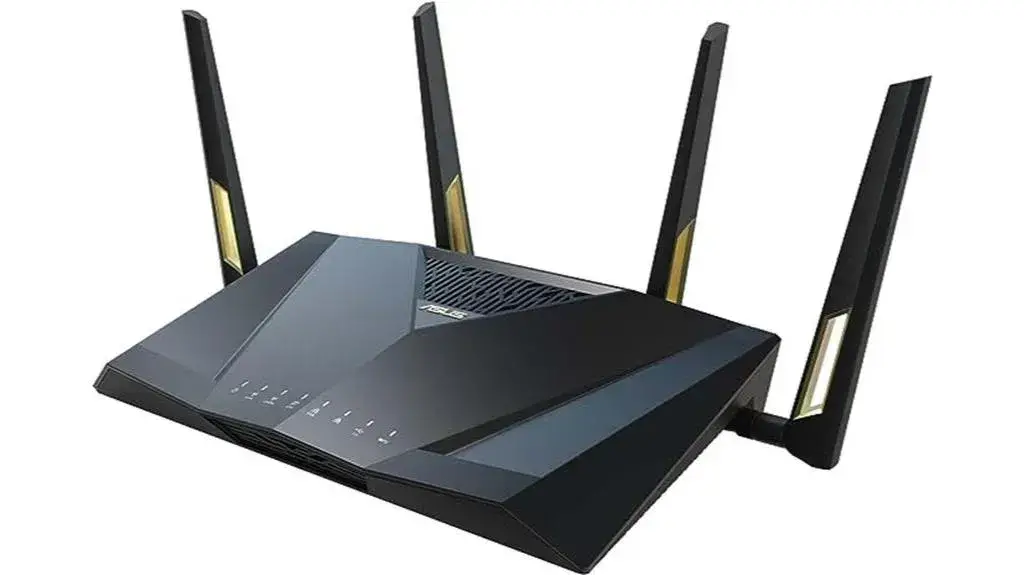 | Multi-Gig Plans | Class: AX6000 (Wi-Fi 6) | Ports: 2x 2.5G + 4x Gigabit | Security: AiProtection Pro | VIEW LATEST PRICE | Read Our Analysis |
| NETGEAR Nighthawk RAXE500 (Wi-Fi 6E) | 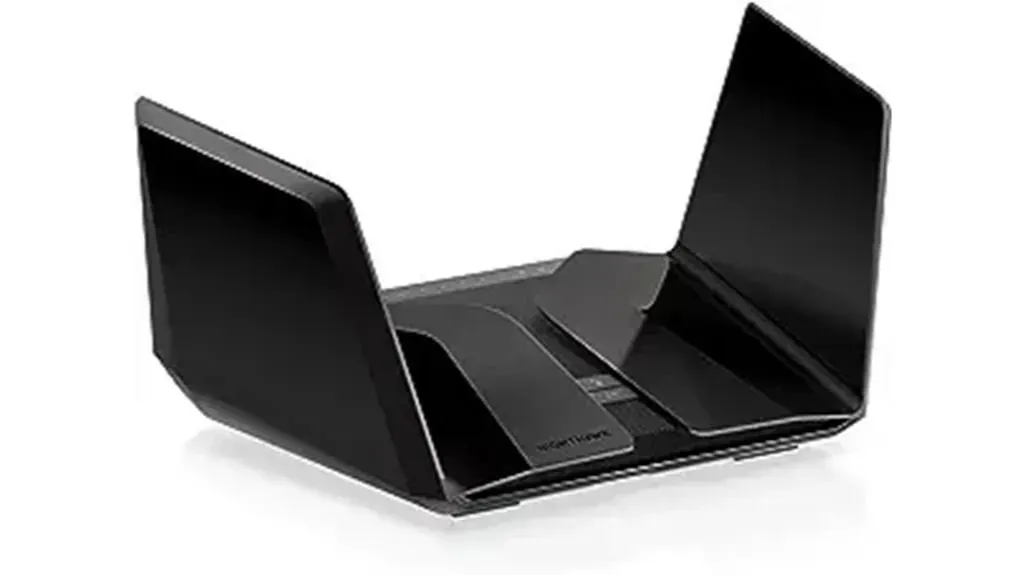 | 6 GHz Band | Class: AXE11000 (Wi-Fi 6E) | Coverage: 3,500 sq ft / 60 devices | Ports: 4 LAN + 2.5G | VIEW LATEST PRICE | Read Our Analysis |
| Reyee RG-E4 (AX3000) | 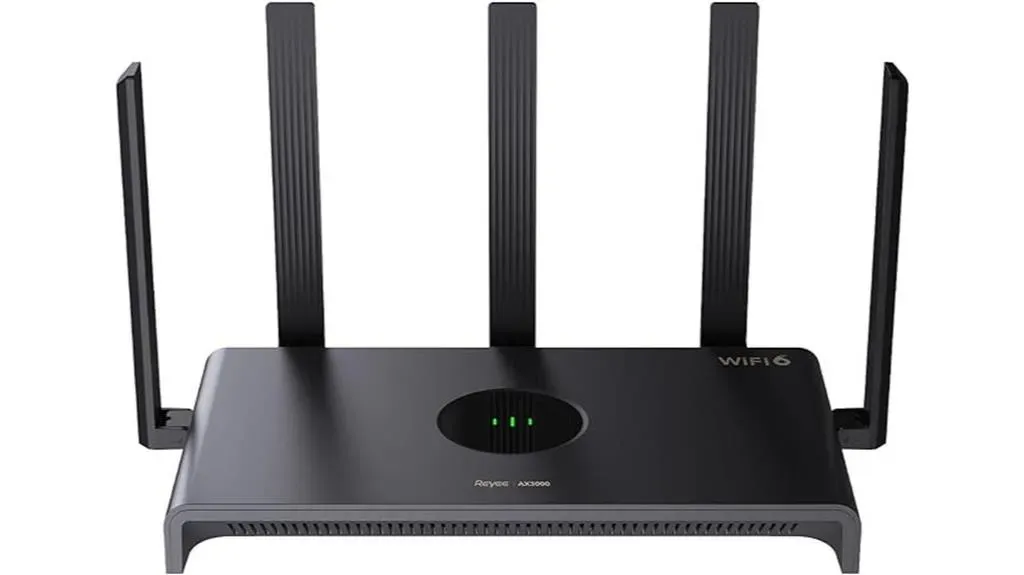 | Cheapest Mesh Option | Class: AX3000 (Wi-Fi 6) | Security: WPA3 | Mesh: Reyee Mesh button | VIEW LATEST PRICE | Read Our Analysis |
Prefer a table? The same ten routers compared by specification. Coverage figures are the makers’ own claim where a maker publishes one; “Varies” means they do not.
| Router | Wi-Fi | Wired ports | Coverage | Best for |
|---|---|---|---|---|
| TP-Link Archer AX55 (AX3000) | AX3000 | 1 WAN + 4 LAN | Varies | Best value |
| NETGEAR Nighthawk RAX50 (AX5400) | AX5400 | 1 WAN + 4 LAN | Varies | Wired-heavy setups |
| TP-Link Archer AX21 (AX1800) | AX1800 | 1 WAN + 4 LAN | Varies | Budget pick |
| Linksys Hydra 6 Mesh (MR20EC) | AX3000 | 1 WAN + 4 LAN | 2,000 sq ft (Linksys) | Mesh-ready |
| Amazon eero 6 (single unit) | Wi-Fi 6 mesh | 2 Ethernet | 1,500 sq ft per unit (eero) | Easiest setup |
| ASUS ROG Rapture GT-AX11000 | AX11000 | 1 WAN + 4 LAN + 2.5G | Varies | Gaming |
| ARRIS Surfboard G34 (modem + router) | AX3000 + DOCSIS 3.1 | 4 Gigabit | Varies | Modem and router in one |
| ASUS RT-AX88U PRO (AX6000) | AX6000 | 2x 2.5G + 4x Gigabit | Varies | Multi-gig plans |
| NETGEAR Nighthawk RAXE500 (Wi-Fi 6E) | AXE11000 (6E) | 4 LAN + 1x 2.5G | 3,500 sq ft / 60 devices (NETGEAR) | 6 GHz band |
| Reyee RG-E4 (AX3000) | AX3000 | Not published | Not published | Cheapest mesh-capable |
Key Takeaways
- Wi-Fi 6 is the standard to buy for fast internet and for many devices sharing one router.
- Routers with beamforming and a mesh system offer optimal range for apartments of any size.
- Stability and strong signal penetration are key for uninterrupted streaming, gaming, and video calls.
- Make sure the router has strong security features and works with all your devices.
TP-Link Archer AX55 (AX3000)
Best Overall ValueView Latest Price✓ Pros- AX3000: 2402 Mbps on 5 GHz and 574 Mbps on 2.4 GHz
- 1 Gigabit WAN + 4 Gigabit LAN ports (TP-Link spec)
- OFDMA, beamforming and four high-gain antennas
- HomeShield adds parental controls and device checks
✗ Cons- Less headroom than a tri-band model if you add many devices
The AX55 is the router I would buy for most one-bedroom flats. It is Wi-Fi 6, it has four wired ports, and TP-Link is the brand with the longest track record at this price.
Nothing on it is exotic, and that is the point: it does the things that matter in a flat, and it does them for less than everything above it on this list.
⚠ Who Should Skip ThisSkip it if your plan is faster than 1 Gbps or if you need a mesh with a dedicated backhaul radio.
🎯 My TakeFor a rented flat with ordinary broadband, this is the sane buy. You are paying for Wi-Fi 6 and four ports, not for a number on the box.
- Class: AX3000 (Wi-Fi 6)
- Speed: 2402 Mbps (5 GHz) + 574 Mbps (2.4 GHz)
- Ports: 1 Gigabit WAN + 4 Gigabit LAN
- Antennas: 4 high-gain, beamforming
- OFDMA: Yes
- Security: WPA3 + TP-Link HomeShield
- Mesh: OneMesh compatible
NETGEAR Nighthawk RAX50 (AX5400)
Best for Wired DevicesView Latest Price✓ Pros- Five Gigabit Ethernet ports (1 WAN and 4 LAN) per NETGEAR
- AX5400, rated to 5.4 Gbps
- NETGEAR Armor security is included
- Works with any internet provider
✗ Cons- Costs more than the AX55 for speed you may not use
- NETGEAR publishes no square-footage figure for it
If you have a NAS, a desktop and a console, this is the one to pick. Five Gigabit ports means fewer of your devices depend on Wi-Fi at all.
It is also fast: NETGEAR rates the RAX50 at AX5400, up to 5.4 Gbps. In a flat, that headroom mostly shows up as stability when several people stream at once.
⚠ Who Should Skip ThisSkip it if you are on a 500 Mbps plan and only stream – the AX55 covers that for less money.
🎯 My TakeI pick this one when the buyer names a NAS in the first sentence. Wired ports are the part of a router that never degrades with distance.
- Class: AX5400 (Wi-Fi 6)
- Speed: Up to 5.4 Gbps
- Streams: 6-stream dual-band
- Ports: 1 Gigabit WAN + 4 Gigabit LAN
- Processor: 1.5 GHz triple-core
- Security: WPA3 + NETGEAR Armor
- Parental controls: NETGEAR Smart Parental Controls
TP-Link Archer AX21 (AX1800)
Best Budget PickView Latest Price✓ Pros- AX1800, rated to 1.8 Gbps
- Four Gigabit LAN ports, same as its bigger brother
- Beamforming and high-gain antennas
- Works with Alexa
✗ Cons- Less bandwidth headroom than an AX3000 router
This is the cheapest router on the list that I would actually recommend to a neighbour. It is Wi-Fi 6, it has the same four LAN ports as the AX55, and 1.8 Gbps is more than a normal flat uses.
Where it gives ground is headroom. If several people in your flat stream 4K at the same time, spend the extra on the AX55 instead.
⚠ Who Should Skip ThisSkip it if you work from home on video all day and someone else streams 4K – go up to the AX3000 model.
🎯 My TakeFor a studio or a one-bedroom flat on a mid-tier plan, this is the value answer. It is the router I would give a parent.
- Class: AX1800 (Wi-Fi 6)
- Speed: Up to 1.8 Gbps
- Ports: 1 Gigabit WAN + 4 Gigabit LAN
- Antennas: High-gain, beamforming
- Voice control: Works with Alexa
- Security: WPA3
- Mesh: OneMesh compatible
Linksys Hydra 6 Mesh (MR20EC)
Best Mesh-Ready RouterView Latest Price✓ Pros- Intelligent Mesh: add a second unit under the same network name
- Linksys publishes coverage up to 2,000 sq ft
- Four Gigabit LAN ports and one WAN port
- AX3000 dual-band
✗ Cons- Setup runs through the Linksys app, which not everyone enjoys
A mesh-ready router is the practical answer for a flat with a long corridor or thick internal walls. You start with one unit; if a room is still weak, you add a second one instead of buying a repeater.
Linksys publishes 2,000 sq ft of coverage for a single MR20EC, and it is AX3000, so it keeps up with the AX55 above on speed.
⚠ Who Should Skip ThisSkip it if your flat is one open room – the AX55 costs less and covers that just as well.
🎯 My TakeThis is the one I would pick for an older building. Adding a second node later is cheaper than discovering in winter that the back bedroom is dead.
- Class: AX3000 (Wi-Fi 6)
- Streams: 2×2 spatial streams
- Ports: 1 Gigabit WAN + 4 Gigabit LAN
- Coverage: Up to 2,000 sq ft (Linksys)
- Mesh: Intelligent Mesh
- Guest network: Yes
- Mounting: Wall mountable
Amazon eero 6 (single unit)
Easiest to Set UpView Latest Price✓ Pros- Set up in the eero app in a few minutes
- Covers up to 1,500 sq ft per unit (eero’s own figure)
- Two Ethernet ports, and you can add units later
- Handles 75+ devices, per eero
✗ Cons- Rated to 500 Mbps, so it will not use a gigabit plan
- This listing is a single unit, not the multi-pack
The eero 6 is the router I hand to someone who does not want to think about routers. It is Wi-Fi 6, eero rates it for plans up to 500 Mbps, and it covers about 1,500 sq ft.
It is a mesh system by design: buy one unit for a small flat, and add a second one later if you need more coverage. That is what makes it worth the price.
⚠ Who Should Skip ThisSkip it if you have gigabit internet – its 500 Mbps rating would be the bottleneck, not your plan.
🎯 My TakeThis is the easiest one here to live with, but be honest about your plan speed. On 500 Mbps or less it is excellent; on 1 Gbps it holds you back.
- Class: Wi-Fi 6 mesh
- Coverage: Up to 1,500 sq ft per unit (eero)
- Speed: Plans up to 500 Mbps
- Ports: 2 auto-sensing Gigabit Ethernet
- Devices: 75+
- Radios: Dual-band
- Setup: eero app
ASUS ROG Rapture GT-AX11000
Best for GamingView Latest Price✓ Pros- Tri-band Wi-Fi 6 rated to 10 Gbps
- 1.8 GHz quad-core CPU and a 2.5G port
- Triple-level game acceleration prioritises game traffic
- AiMesh lets you add another ASUS unit
✗ Cons- Large, and priced for enthusiasts
- More router than most flats need
This is the gaming pick, and the difference is in the tuning rather than only the spec sheet. Game traffic gets prioritised at three points in the chain, which is what reduces lag spikes when someone else starts a download.
It also has the fastest wired port here after the 2.5G models, plus AiMesh if you later need coverage in another room.
⚠ Who Should Skip ThisSkip it unless you actually game competitively – a flat on a normal plan will not use a 10 Gbps tri-band router.
🎯 My TakeIt is genuinely good and genuinely expensive. Buy it for the low-latency tuning, not for the big number, and only if gaming is the reason for the purchase.
- Class: AX11000 (Wi-Fi 6)
- Bands: Tri-band
- CPU: 1.8 GHz quad-core
- Ports: 1 WAN + 4 LAN + 2.5G multi-gig
- Gaming: Triple-level game acceleration
- Security: AiProtection
- Mesh: AiMesh
ARRIS Surfboard G34 (modem + router)
Best Modem and Router in OneView Latest Price✓ Pros- DOCSIS 3.1 cable modem and Wi-Fi 6 router in one box
- Four Gigabit Ethernet ports (ARRIS data sheet)
- Runs on cable service from the major US providers
- One less box to power and one less cable
✗ Cons- Only worth buying if you are on cable internet
- Some users report trouble with 2.5GbE devices
The G34 replaces two boxes with one. It handles DOCSIS 3.1 cable service and broadcasts Wi-Fi 6, and it has four Gigabit ports for anything that stays still.
If your flat is on cable, this is the neatest way to own your equipment instead of renting a gateway. If you are on fibre or DSL, it is the wrong device.
⚠ Who Should Skip ThisSkip it on fibre, DSL or fixed wireless. This is a cable modem first.
🎯 My TakeThe appeal is simplicity and, over a few years, not paying rental. If you rent a gateway from a cable provider, this is the box that ends that.
- Type: DOCSIS 3.1 modem + Wi-Fi 6 router
- Wi-Fi speed: Up to 3000 Mbps (ARRIS)
- Ports: 4 Gigabit Ethernet
- Phone port: No
- MoCA: No
- Compatibility: Major U.S. cable providers
- Warranty: 2-year limited
ASUS RT-AX88U PRO (AX6000)
Best for Multi-Gig PlansView Latest Price✓ Pros- Two 2.5 Gbps ports and four Gigabit LAN ports (ASUS spec)
- AX6000, rated to 6000 Mbps
- AiProtection Pro by Trend Micro, no subscription
- Eight antennas and a quad-core CPU
✗ Cons- 2.5G ports only pay off above a 1 Gbps plan
- Priced for enthusiasts
The RT-AX88U PRO is the pick when your plan is faster than a Gigabit. It has two 2.5 Gbps ports plus four Gigabit LAN ports, so the fast port is not the only fast port.
Below a 1 Gbps plan you are paying for something you cannot use. Above it, this is the cheapest way here to actually see the extra speed on a wired device.
⚠ Who Should Skip ThisSkip it on a 500 Mbps or 1 Gbps plan – a Gigabit port is not your bottleneck at that speed.
🎯 My TakeBuy this for the wired ports, not the Wi-Fi number. It is the router I would fit if the flat has a fibre line and a NAS.
- Class: AX6000 (Wi-Fi 6)
- Speed: 1148 + 4804 Mbps
- Ports: 1x 2.5G WAN + 1x 2.5G LAN + 4x Gigabit LAN
- WAN aggregation: Yes
- Security: AiProtection Pro (Trend Micro)
- Parental controls: Yes
- Mesh: AiMesh
NETGEAR Nighthawk RAXE500 (Wi-Fi 6E)
Best for the 6 GHz BandView Latest Price✓ Pros- Wi-Fi 6E: adds the 6 GHz band, which is close to empty
- NETGEAR publishes 3,500 sq ft and 60 devices
- AXE11000 tri-band, rated to 10.8 Gbps
- 2.5G port, configurable, plus four Gigabit LAN ports
✗ Cons- Only 6 GHz devices benefit from the newest band
- The most expensive router here
The 6 GHz band is the reason to buy this. In a block of flats the 2.4 GHz and 5 GHz bands are crowded with everyone else’s routers; 6 GHz is nearly empty, and Wi-Fi 6E devices get that band to themselves.
NETGEAR publishes coverage up to 3,500 sq ft and capacity for 60 devices. In a flat, treat that as headroom rather than a requirement.
⚠ Who Should Skip ThisSkip it if none of your devices support 6 GHz – you would be paying for a band you cannot use yet.
🎯 My TakeThis is the one for a crowded building, provided your laptop or phone is recent enough to use the 6 GHz band. Check that first; otherwise it is an expensive Wi-Fi 6 router.
- Class: AXE11000 (Wi-Fi 6E)
- Bands: Tri-band including 6 GHz
- Speed: Up to 10.8 Gbps
- Ports: 4x Gigabit LAN + 1x 2.5G/1G configurable WAN
- Coverage: Up to 3,500 sq ft (NETGEAR)
- Devices: Up to 60 (NETGEAR)
- Processor: 1.8 GHz quad-core
- Security: NETGEAR Armor
Reyee RG-E4 (AX3000)
Cheapest Mesh-Capable RouterView Latest Price✓ Pros- AX3000, rated to 2402 Mbps on the 5 GHz band
- WPA3 encryption
- A Reyee Mesh button pairs a second unit
- The lowest price here for AX3000
✗ Cons- Reyee publishes no reachable specification page, so coverage is unverified
- Support and documentation are thinner than the big brands
The RG-E4 is the price play. On paper it is AX3000 with WPA3 and mesh pairing, which is a lot of router for the money.
The catch is documentation. I could not reach a Reyee specification page for this model, so I am not quoting a coverage figure for it, and I would not build a whole flat around it.
⚠ Who Should Skip ThisSkip it if you want maker-published specs or long-term firmware history – buy the AX55 instead.
🎯 My TakeBuy it as a second node or a cheap spare, not as the centre of a network you depend on. On price it wins; on documentation it does not.
- Class: AX3000 (Wi-Fi 6)
- Speed: Up to 2402 Mbps on the 5 GHz band
- Security: WPA3
- Mesh: Reyee Mesh button
- Coverage: Not published by the maker
- Wired ports: Not published by the maker
- Device capacity: Not published by the maker
Factors to Consider When Choosing Routers for Apartments
Four things decide how well Wi-Fi works in a flat. The brand name is not one of them.
Size and coverage
Match the router to your floor area. One good router covers most one-bedroom flats, while two floors, long corridors or thick internal walls usually need a mesh pair.
Beamforming helps at the edge of the range, but no router pushes signal through a structural wall. Where it sits matters more than what it cost.
Coverage figures are the maker’s own claim, checked on 1 October 2026. Where a maker publishes none for a model, the tables say “Varies” rather than repeat a retailer’s number.
Your plan is rarely the problem. According to CableLabs, cable networks already offer 1 Gbps service across 80 percent of the United States, up from just 4 percent in 2016. If your flat has fast internet and slow Wi-Fi, spend on the router.
Wi-Fi technology
Buy Wi-Fi 6 (802.11ax). It handles a crowded spectrum better than Wi-Fi 5, and in an apartment block every neighbour’s router competes for the same channels. Wi-Fi 6E adds the 6 GHz band, which is close to empty in most buildings.
Wi-Fi Alliance, the body that certifies the standard, describes why that matters in a block of flats:
Wi-Fi 6 delivers higher data rates, greater capacity, stronger performance in dense environments, and improved power efficiency for demanding settings such as large public venues, enterprises, and IoT deployments.Wi-Fi Alliance, “Wi-Fi CERTIFIED 6”, read 1 October 2026
- Wi-Fi 6 (802.11ax)
- the current mainstream Wi-Fi standard, built for many devices sharing one access point.
- OFDMA
- splits one Wi-Fi channel into sub-channels so several devices transmit in the same slice of airtime.
- MU-MIMO
- the router serves several devices at once instead of taking turns.
- Mesh system
- two or more units sharing one network name and handing your devices between them.
- Backhaul
- the link between mesh units; a wired backhaul leaves the Wi-Fi radios free for your devices.
Connection stability
Stability comes from the band you use and the wiring behind it. Put anything that stays still on the 5 GHz band: it is faster and far less crowded than 2.4 GHz.
Hide an Ethernet cable between mesh units if you can, because a wired backhaul keeps both radios free for your devices. A router behind a TV or inside a cabinet also loses signal to its own surroundings.
Security features
Check for WPA3 encryption and a firewall that is on by default, then turn on automatic firmware updates if the router offers them. An unpatched router is a bigger risk than an old one.
A guest network keeps visitors off your own devices, and if you work from home, look for VPN server support on the router rather than on every laptop.
Device compatibility
Count what you will connect: phones, laptops, a TV, a console, smart plugs and speakers. Every model here handles a normal flat.
Then check the ports that matter to you: a wired desktop, a NAS drive, or a TV that streams better over Ethernet. Wi-Fi 6 is backwards compatible, so older devices keep working.
Setup ease
Setup matters twice: on the day you install the router, and on the day you add a unit. App-based setup, offered by eero, Linksys, NETGEAR, TP-Link and ASUS, is the least painful route.
These models support one-touch mesh pairing if you expand later. Install the app first, and put the router where the signal needs to be rather than where the old one sat.
Price considerations
Spend on the Wi-Fi generation and enough radios, not on the biggest number in the specification. A mid-range Wi-Fi 6 router in a good position beats a premium model shut inside a cupboard.
Prices move too fast to quote, so every model here links to its own listing instead.
Brand reliability
These are established brands, but age is not the same as support. Before you buy, find the most recent firmware release for that exact model on the maker’s support page.
A router that stopped receiving updates is a security risk, however good its specification was on launch day.
Move the router first: off the floor, out of a cupboard, away from the TV and any metal. If one room still drops, add a second mesh unit rather than a repeater — a repeater halves the throughput of everything that connects through it.
Conclusion
In one line: match the router to your floor area and your plan speed, and stop there. The Archer AX55 covers a small flat on an ordinary plan; the Linksys Hydra 6 is the one to start with if your flat is long; the eero 6 is the easiest to live with on plans up to 500 Mbps. Spending more only helps if your devices and your plan can use it — a gigabit plan cannot rescue a router that caps at 500 Mbps, and a 6 GHz router does nothing for devices that cannot see that band.
So, you’ve got the lowdown on the best routers to enhance your Wi-Fi in tight spaces.
Whether you’re leaning towards the TP-Link AX3000 for its sleek speed, the NETGEAR Nighthawk for top-tier speeds, or the convenience of an Amazon eero 6 mesh system, there’s a fit for every apartment size and need.
Remember to consider your space, budget, and tech needs.
Pick one from this list, and you’re all set for seamless streaming, gaming, and browsing.
Frequently Asked Questions
Do concrete or drywall walls slow Wi-Fi down?
Different materials in your apartment, such as concrete or drywall, can impact your router’s speed. Concrete walls block signals more than drywall, so you might experience slower speeds or weaker links in certain areas.
Can these routers handle many devices at once?
Yes, these routers are designed to handle many devices at once without big speed drops, even in densely populated areas. You’ll find they’re quite efficient at maintaining strong links, so your online activities keep running smoothly.
Are these routers private and secure enough for a shared building?
You’re wondering how these routers hold up privacy and security-wise, right? They’re designed with strong encryption and secure networks in mind, which keeps your shared living space safe from unwanted intrusions or data breaches.
Which settings help when the airwaves are crowded?
To optimize your router’s speed in areas with lots of noise, you’ll want to adjust its settings. Try changing the Wi-Fi channel or enabling Quality of Service (QoS) to focus on your traffic.
How do firmware updates work, and why do they matter?
Firmware updates improve your router’s speed and longevity by fixing bugs and enhancing security. You’ll usually find easy update instructions on the maker’s website or app, making it straightforward even if you’re not tech-savvy.
Sources and Method
Every product here was matched to its own live listing in the US on 1 October 2026, so the model named on the page is the model the link opens. Each one was then checked against the maker’s own specification page on the same day: TP-Link, NETGEAR, Linksys, eero, ASUS, ARRIS and Reyee. That check found two specification errors, both corrected in this revision: the ASUS RT-AX88U PRO port count, and the eero 6 pack size and coverage. Reyee publishes no reachable specification page for the RG-E4, so no unverifiable Reyee figure is quoted. Nothing on this page was bought, configured or speed-tested, and no price is quoted because prices change.
The evidence behind the list, including the two specification errors this check found and fixed.
- Wi-Fi Alliance, Wi-Fi CERTIFIED 6 — the quoted description of Wi-Fi 6 in dense environments, and the 802.11ax features credited here.
- CableLabs, 10G — the gigabit-availability figures quoted above.
- eero, eero 6 — per-unit coverage, speed and pack options.
- TP-Link, Archer AX55 and Archer AX21 — port counts.
- NETGEAR, RAX50 and RAXE500 — port counts, speeds, and the 3,500 sq. ft. coverage figure.
- ASUS, RT-AX88U PRO specifications and ROG Rapture GT-AX11000 specifications — the port counts that corrected this page.
- Linksys, MR20EC support article — four Gigabit LAN ports, one WAN port, 2,000 sq. ft. coverage.
- ARRIS, SURFboard G34 data sheet — four Gigabit Ethernet ports, DOCSIS 3.1.
- IEEE, IEEE 802.3 (Ethernet) — the standard behind the wired ports and the wired-backhaul advice.
About this page. Researched and written by Afroz Ahmad, a CCIE with more than 20 years designing business, ISP and carrier networks, and reviewed against its cited sources on 1 October 2026.
Afroz Ahmad, “Best Routers for Apartments: Maximize Small Space Wi-Fi”, afrozahmad.com, reviewed 1 October 2026.
https://afrozahmad.com/blog/best-routers-for-apartments/
This page explains which routers suit a small apartment and why crowding and walls matter more than headline speed. It is not a record of physical testing, and no price is quoted because prices change.

- DOCSIS Explained: 3.0 vs 3.1 vs 4.0 and What Sets Your Real Speed - September 29, 2026
- Router Lights Explained: What the Colours Mean on Any Router - September 28, 2026
- eero Light Is White but There Is No Internet: What to Check - September 28, 2026