Is 500 Mbps Fast Internet? Yes—500 Mbps is fast. It comfortably supports many simultaneous 4K streams, dozens of HD calls, smooth online gaming, and large downloads without noticeable slowdowns. Assumptions: typical 4K streams use ~15–25 Mbps depending on service and content; HD calls vary by platform; and real-world Wi‑Fi is often 20–50% lower than the plan speed due to overhead and signal conditions.
Key Takeaways
- A 500 Mbps internet connection provides very fast download and (on fiber) typically fast upload speeds compared to regular plans. This enables activities like 4K streaming, online gaming, video calls, and more across multiple devices simultaneously.
- 500 Mbps offers ample bandwidth to support many simultaneous 4K video streams (plan ~15–25 Mbps per 4K stream), dozens of HD calls, and high-quality online gaming with plenty of headroom.
- While not essential just for gaming, a 500 Mbps connection provides headroom so other usage in the home is less likely to impact gameplay.
- To enjoy the full benefits of 500 Mbps speed, optimize your home network with the right equipment like Wi‑Fi 6E/7 routers, use ethernet for stationary devices, and minimize wireless interference.
- 500 Mbps internet plans are widely available. Pricing is dynamic by address, with many providers offering promotional pricing and price locks; always check the latest offer where you live.
500 Mbps Internet Meaning
What does 500 Mbps internet mean?
500 Mbps translates to 500 Megabits of data transfer per second. 500 Mbps equates to the ability to transfer 62.5 megabytes (MB) of data per second since 1 byte = 8 bits (so 500 Mb = 62.5 MByte)
Mbps stands for Megabits per second, and it is the standard unit used to measure internet speeds.
Setting up the right expectations with 500 Mbps
– The Wi-Fi speed you experience at home is typically 20-50% lower than the advertised download speed due to wireless interference and weakening as you move away from the router.
– Upload on fiber plans is usually symmetrical, while cable uploads vary and are rising with mid/high-split and DOCSIS 4.0 upgrades.
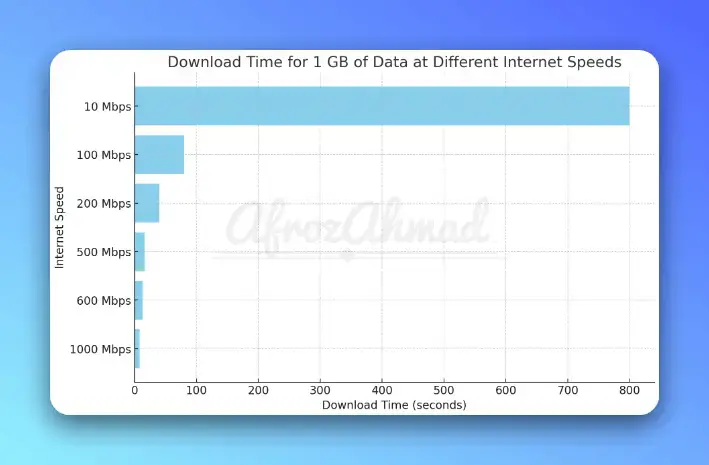
How fast is 500 Mbps? – Comparisons With Other Internet Speeds
To better understand if 500 Mbps is truly fast for today’s internet requirements, let’s compare it with some other speed tiers:
| Speed | Download Time (1GB (GigaByte) | YouTube Streams | Netflix Streams | Online Gaming (No. of Users) | Video Conferencing (No. of SD/HD Calls) |
|---|---|---|---|---|---|
| 10 Mbps | 800 seconds | 3 | 0 | 1-3 | 20/4 |
| 100 Mbps | 80 seconds | 10 | 2 | 10-33 | 200/40 |
| 200 Mbps | 40 seconds | 20 | 4 | 20-66 | 400/80 |
| 500 Mbps | 16 seconds | 50 | 20 | 50-166 | 1000/200 |
| 600 Mbps | 13 seconds | 60 | 24 | 60-200 | 1200/240 |
| 1 Gbps | 8 seconds | 100 | 40 | 100-333 | 2000/400 |
The above data is based on updated real-world assumptions for bitrates and overhead.
- Video Conferencing:
- Standard Definition (SD): 0.3 to 0.5 Mbps
- High Definition (HD): 1 to 2.5 Mbps
- Online Gaming:
- Most online gaming: 3 to 6 Mbps (However, latency/ping is more crucial here)
As you can see, 500 Mbps enables a true high-speed internet experience suitable for modern needs. While 1 Gbps plans are faster, 500 Mbps itself unlocks most use cases for high bandwidth activities.
To put this into perspective, here is how 500 Mbps compares to common internet speed tiers:
- 10-25 Mbps: Basic internet plans for light browsing and SD video streaming
- 100 Mbps: Fast enough for HD streaming and video calls
- 200 Mbps: Supports 4K streaming and online gaming
- 500 Mbps: Blazing fast speed for simultaneous 4K streams
- 1 Gbps (1000 Mbps): Ideal for large households with heavy usage
As you can see, 500 Mbps offers extremely fast download and upload speeds compared to regular internet plans. Having 500 Mbps or more empowers you to use the internet more intensely on multiple devices at the same time, making it the best internet speed for heavy users.
Check out the below post for more information on other internet speeds:
- Is 10 Mbps fast Enough?
- The Ultimate Guide to 200 Mbps Internet Speed: Is 200 Mbps Fast Enough
- Is 600 Mbps Fast Internet Speed?
- Is 1000 Mbps Fast Internet? (The Gold Standard of Internet Speeds)
What Can You Do with 500 Mbps Internet? – Applications and Use Cases for 500 Mbps
A 500 Mbps internet connection unlocks endless possibilities when it comes to internet usage. Here are some common applications and use cases:
Is 500 Mbps fast enough for 4K and HD Video Streaming?
Yes, a 500 Mbps internet connection is excellent for streaming 4K and HD video content. Here are some key reasons why:
- A single 4K UHD stream from Netflix or other services now typically needs around 15 Mbps for Netflix’s recommendation; planning 15–25 Mbps per stream covers variations by service and content. With 500 Mbps, you can comfortably run many 4K streams at once.
- For 1080p Full HD video, the common requirement is 5–10 Mbps. A 500 Mbps connection easily supports HD streaming on dozens of devices at the same time.
- High-quality streaming platforms like YouTube, Netflix, and Prime Video adapt stream quality based on available bandwidth. With 500 Mbps, you should consistently get high resolutions and bitrates.
- Buffering issues during streaming are often caused by network congestion and latency rather than raw speed alone. The high bandwidth of 500 Mbps helps minimize buffering.
- Even at times of peak household usage, the headroom of 500 Mbps ensures each stream gets sufficient bandwidth for smooth playback.
- For homes with multiple 4K TVs and displays, 500 Mbps enables streaming different 4K content to each screen without quality issues.
- Avid streamers who use services like Twitch for both playing and watching streams benefit from the high speeds.
- To future‑proof your home network, 500 Mbps bandwidth will support higher‑resolution formats as they become more common.
In summary, a 500 Mbps internet plan offers abundant speed for smooth 4K and HD streaming across a large number of devices, making it an ideal choice for homes with many users who stream frequently.
Is 500 Mbps Fast Enough for Gaming?
Here are some key points on whether 500 Mbps is fast enough for gaming:
- For most online games, a download speed between 3-10 Mbps is sufficient for good performance. Latency and consistency matter more than raw speed.
- 500 Mbps provides ample bandwidth headroom for an excellent gaming experience, even when others are streaming or downloading in the background.
- High‑graphics MMORPGs and competitive esports titles can benefit from fast, stable connections—especially if you are gaming and streaming in HD/4K simultaneously.
- With a 500 Mbps connection, other bandwidth‑intensive activities can happen simultaneously with minimal effect on in‑game performance.
- Wi‑Fi can be a bottleneck for gaming due to interference and signal limits; a wired ethernet connection is recommended where possible.
- For professional streamers or pro esports players, 1 Gbps or faster may be preferred. For most gamers, 500 Mbps is excellent.
- Factors like router QoS, network congestion, and distance from servers often play a bigger role in gaming experience than speed alone.
- While not always necessary just for gaming, a 500 Mbps connection provides plenty of headroom and minimizes the impact of other activity during gameplay.
So, in summary, while ultra‑fast speeds aren’t essential for online gaming, a 500 Mbps connection offers plenty of bandwidth to enable an awesome gaming experience free of speed‑related slowdowns. For pro‑level competitive gaming, faster tiers can be ideal.
Is 500 Mbps fast enough for Video Conferencing and Calling?
So if you have a large family or need to make frequent video calls for work, 500 Mbps has you covered. Yes, a 500 Mbps internet connection is excellent for video conferencing and calling. Here are some key reasons:
- Mainstream tools like Zoom, Skype, FaceTime, and Google Meet need only single‑digit Mbps bandwidth for HD calls. For 1080p specifically, Zoom recommends around 3.8 Mbps up and 3.0 Mbps down; gallery view with 25–49 tiles typically needs ~2.0–4.0 Mbps down.
- Household concurrency depends on device capability and plan settings. With 500 Mbps, multiple HD meetings can run at once with room to spare.
- Consistent high bandwidth ensures voice and video quality are not impacted even at times of heavy internet usage by other devices.
- Wi‑Fi networks can struggle under load; a wired or well‑tuned Wi‑Fi 6E/7 setup helps maintain quality.
- For busy households that rely on video calling for remote work and learning, 500 Mbps provides sufficient capacity to prevent slowdowns when multiple users are conferencing.
In summary, a 500 Mbps plan offers abundant headroom and low contention for clear audio and video during calls.
Is 500 Mbps plan fast enough for Smart Home Devices?
Here are the key points on whether 500Mbps internet is fast enough for smart home devices:
- Most smart home devices like security cameras, smart speakers, lighting systems, etc. require very little bandwidth—typically less than 1 Mbps per device.
- Even advanced devices with 4K video like smart displays and video doorbells use less than 10 Mbps individually.
- A 500 Mbps connection provides massive overhead for simultaneously running dozens of smart home devices without congestion issues.
- Wi‑Fi coverage from a single router may not be sufficient for large homes. A mesh system can extend coverage so devices stay connected reliably.
- Newer smart home devices continue to add richer features; a 500 Mbps plan keeps your setup future‑ready.
- With a 500 Mbps connection, you can install many smart cameras for whole‑home coverage without worrying about bandwidth limitations during streaming and recording.
- Managing many smart devices from a central dashboard is made smooth thanks to abundant speeds.
So in summary, while most individual smart home devices work fine on regular internet plans, a 500 Mbps connection provides plenty of headroom for simultaneously operating and expanding an advanced smart home ecosystem.
Is 500 Mbps fast enough for Downloading Large Files?
Having to download large files like movies, games, software, OS updates, etc. is a breeze with 500 Mbps speed.
To give you a perspective, here is the time it takes to download some common large files on a 500 Mbps connection (ideal conditions):
- Full HD Movie (5GB) – about 1 min 20 sec
- UHD 4K Movie (15–20GB) – about 4–5 min
- PC/Console Game (50GB) – about 15 min
- Windows or iOS Update (4–8GB) – about 1–2 min
So you no longer have to deal with slow, interrupted downloads.
Is 500 Mbps fast enough for Cloud Storage and Backup?
Yes, a 500 Mbps internet connection provides more than enough speed for seamless cloud storage and backup:
- Uploading files and folders to cloud storage services like Dropbox, Google Drive, iCloud typically uses 1–20 Mbps per active device, depending on file size and concurrency.
- With high download and (on fiber) high upload speeds, you can swiftly transfer even very large files and complete system backups to the cloud.
- Restoring huge backups from cloud services to multiple devices simultaneously is fast thanks to abundant bandwidth.
- Collaborating on large files and datasets on the cloud with team members is smooth thanks to ample capacity.
- Most cloud backup software can utilize modest, steady upload bandwidth; a 500 Mbps plan leaves headroom for other activities.
- Sufficient bandwidth enables keeping local copies of cloud data in sync in near real‑time for fast access and recovery when needed.
In summary, 500 Mbps internet speed provides more than enough capacity for uploading, downloading, syncing, sharing, and backing up even very large amounts of data to the cloud swiftly and reliably.
Optimizing Your 500 Mbps Connection
To enjoy the full benefits of 500 Mbps speed, you need to optimize your home network setup:
- Use a compatible modem/router – Invest in a high-quality DOCSIS 3.1 modem and Wi‑Fi 6E or Wi‑Fi 7 router to handle 500 Mbps properly.
- Minimize wireless interference – Position your router centrally and away from other electronics to ensure strong Wi‑Fi coverage.
- Connect devices via Ethernet – For desktop PCs, consoles and home media centers, use Ethernet for the fastest and most reliable connectivity.
- Upgrade connected devices – Older devices with outdated Wi‑Fi may not support the speeds. Upgrade them over time.
- Limit bandwidth-intensive activities – When using 500 Mbps for a latency-sensitive application like online gaming, limit other bandwidth-heavy tasks.
- Check for performance issues – Use speed tests regularly to check your actual speed and identify any potential issues proactively.
Upgrading to 500 Mbps Internet Plans
Here are some steps to upgrade your home’s internet speed to 500 Mbps:
- Check availability in your area – Not all neighborhoods have network infrastructure to support 500 Mbps plans yet. Contact providers to check.
- Compare plans and pricing – Plans around 500 Mbps can vary widely by address due to promotions and price locks. Compare deals to find the best value.
- Discuss upgrades with your provider – Existing customers may be eligible for discounted upgrade rates when switching plans.
- Get any required equipment – Make sure your provider supplies a compatible modem and router. If not, purchase your own.
- Schedule installation – Most providers can upgrade your speed quickly; some changes can be activated remotely.
Here are some of the available 500 Mbps internet plan notes with major ISPs in the US:
| Provider | Download Speed | Upload Speed | Price Per Month | Contract Length |
|---|---|---|---|---|
| Xfinity | 500 Mbps | ~20–100+ Mbps (varies by market) | ~$55–$85 | Price lock options (1–5 years) |
| AT&T Fiber | 500 Mbps | 500 Mbps | ~$60 | No annual contract |
| Spectrum | 500 Mbps | ~20–40+ Mbps (higher in upgraded areas) | ~$50 promo (12 mo) | No contract |
| Verizon Fios | 500 Mbps | 500 Mbps | ~$80 | No contract |
| Frontier FiberOptic | 500 Mbps | 500 Mbps | Promos often near ~$50 | No annual contract |
| Optimum | 500 Mbps | ~50–500 Mbps (fiber vs cable) | Promo ~$50–$60; standard varies | Varies |
To summarize:
- Download speeds are universally advertised as 500 Mbps across providers.
- Upload speeds vary: fiber is typically symmetrical; cable uploads depend on local upgrades and may range from ~20 Mbps to 100+ Mbps.
- Monthly prices are highly location‑dependent due to promos and price locks; expect a wide range from about $50 to $85.
- Contract structures vary; some providers use price locks or month‑to‑month terms instead of long contracts.
The prices above can change frequently. Contact your area’s internet provider for the most accurate offer at your address.
The Future of Faster Internet Speeds
While a 500 Mbps download speed seems extremely fast today, internet speeds offered by internet service providers will continue getting faster thanks to new technologies. The FCC’s current broadband benchmark is 100/20 Mbps, with a longer‑term goal of 1 Gbps/500 Mbps.
The rollout of high-speed fiber optic networks and new standards like Wi‑Fi 6E and Wi‑Fi 7 will bring multi‑gigabit speeds and lower latency to more households.
5G home internet services deliver a wide range of real‑world speeds depending on location and spectrum—often roughly mid‑double‑digits to a few hundred Mbps, with gigabit‑class peaks in select areas.
Global speed reports now show several countries with median fixed downloads well above 300–400 Mbps, and the US median fixed download sitting near the upper‑200s. Actual home experience still depends on factors like the number of devices, activity types, and Wi‑Fi quality.
Conclusion
A 500 Mbps internet connection is undoubtedly extremely fast by today’s standards. It empowers you to use the internet in ways not possible on slower 100 Mbps or below plans. You can simultaneously stream 4K video, play online games, download large files, and more on multiple devices without speed constraints.
While 1 Gbps internet is faster, 500 Mbps itself unlocks most modern use cases and supports internet usage by large households with many connected devices. To enjoy a true next-generation internet experience today, upgrading to at least a 500 Mbps plan is highly recommended for families and power users.
So, in summary, yes—500 Mbps is a very fast internet speed in 2026!
Ref: https://www.speedtest.net/global-index
Frequently Asked Questions
Is 500 Mbps overkill?
For many households, 500 Mbps may be more than necessary. Typical needs for smaller homes are often met by 100–200 Mbps. Larger families, heavy streamers, or homes with dozens of connected devices can benefit from the extra headroom 500 Mbps provides.
The exception is busy households with many simultaneous 4K streams, frequent large downloads, or extensive smart home setups. In those cases, 500 Mbps can prevent slowdowns and keep everything responsive.
Is 500 Mbps fast for 4 people?
Yes, 500 Mbps is fast enough for 4 people. All four individuals can simultaneously stream ultra HD content, play online games, and use other online applications without lag or buffering, assuming typical Wi‑Fi conditions and modern devices.
How many devices can you have on 500 Mbps?
A 500 Mbps connection can support many devices at once. As a rough guide, it can handle 15–20 concurrent high‑bandwidth uses (e.g., 4K streams, large downloads) or far more mixed light usage across smart home devices, browsing, music, and chat.
How many hours of streaming is 500 Mbps?
Streaming time isn’t limited by speed—it’s limited by your data plan. As a usage guide, HD streaming can use around 3 GB per hour and 4K up to roughly 7 GB per hour per device. Unlimited data plans won’t impose a monthly hours cap based on speed alone.
The actual data used varies by platform, compression, and content. Your ISP account tools or your streaming app can show precise usage.
Is 500 Mbps good for family of 5?
Yes, 500 Mbps is generally good for a family of 5. Multiple devices can connect simultaneously without significant slowdowns, enabling seamless streaming, gaming, browsing, cloud backups, and video calls for everyone.
For the best results, ensure strong Wi‑Fi coverage (mesh if needed) and wire in stationary devices like TVs or consoles.
What does 500mb broadband mean?
500mb broadband usually refers to a download speed of 500 megabits per second (Mbps). Upload speed varies by technology: fiber is typically 500/500, while cable uploads on a 500‑tier can range widely depending on local upgrades.
In practical terms, 500 Mbps moves data at up to about 62.5 megabytes per second (MB/s) under ideal conditions.
Do I need 500 mbps?
Not everyone needs 500 Mbps. Most households that primarily browse, stream a few HD/4K videos, and video chat can do well with 100–200 Mbps. Choose 500 Mbps if you have many 4K streams at once, large game downloads, heavy cloud backups, or lots of connected devices.
A 500 Mbps connection is ideal for households with multiple devices connected simultaneously, frequent large file transfers, or where low latency and headroom are important.
How many devices can 500mbps support ?
A 500 Mbps internet connection can comfortably support around 15–20 concurrent high‑bandwidth activities (such as 4K streams or big downloads) and far more devices for light tasks like browsing, music, or smart home control.
Theoretical maximums are much higher for light usage, but real‑world results depend on Wi‑Fi quality, device capabilities, and network overhead.

- Telecom Network Infrastructure: Complete Guide to Components & Design - January 6, 2026
- TP-Link TL-SG108E vs Netgear GS308E: Budget Smart Switches - January 5, 2026
- MikroTik CRS305-1G-4S+ Review: The Ultimate Budget SFP+ Switch Guide - December 25, 2025