What Does VPS Stand For?

What does VPS stand for? A VPS is an acronym for Virtual Private Server. It is a remote server hosted in the cloud, where you can host almost anything you can host locally on your computer or a server.

What does VPS stand for? A VPS is an acronym for Virtual Private Server. It is a remote server hosted in the cloud, where you can host almost anything you can host locally on your computer or a server.

In this article, we will discuss OSPF virtual link, when you should use it, requirements, key points, and how to configure it. As a bonus, we will also discuss an alternative option for the OSPF virtual link.

There are three OSPF network types: broadcast, point-to-point, and non-broadcast. There are also two Cisco-proprietary types: point-to-multipoint and point-to-multipoint non-broadcast. Let's explore all five OSPF network types.

OSPF is the most widely used routing protocol in networking. Knowing the types of OSPF routers and, most importantly, Area Border Routers in OSPF becomes crucial to understanding the overall design and configuration of OSPF. This article will discuss the…

This blog post will explain what OSPF area types are, why we need them, their benefits, how they work, and how to configure them in your network.

OSPF Link State Advertisements – All 11 OSPF LSA Types Explained An important part of OSPF is the Link State Advertisements (LSAs). LSAs are generated by every router in the AS and contain information about the router’s links and connected…

I recommend you read my previous blog post about OSPF and how it works first. This article will help you understand different OSPF states and the importance of forming and maintaining OSPF neighbors. Let us get started. I also recommend going through…
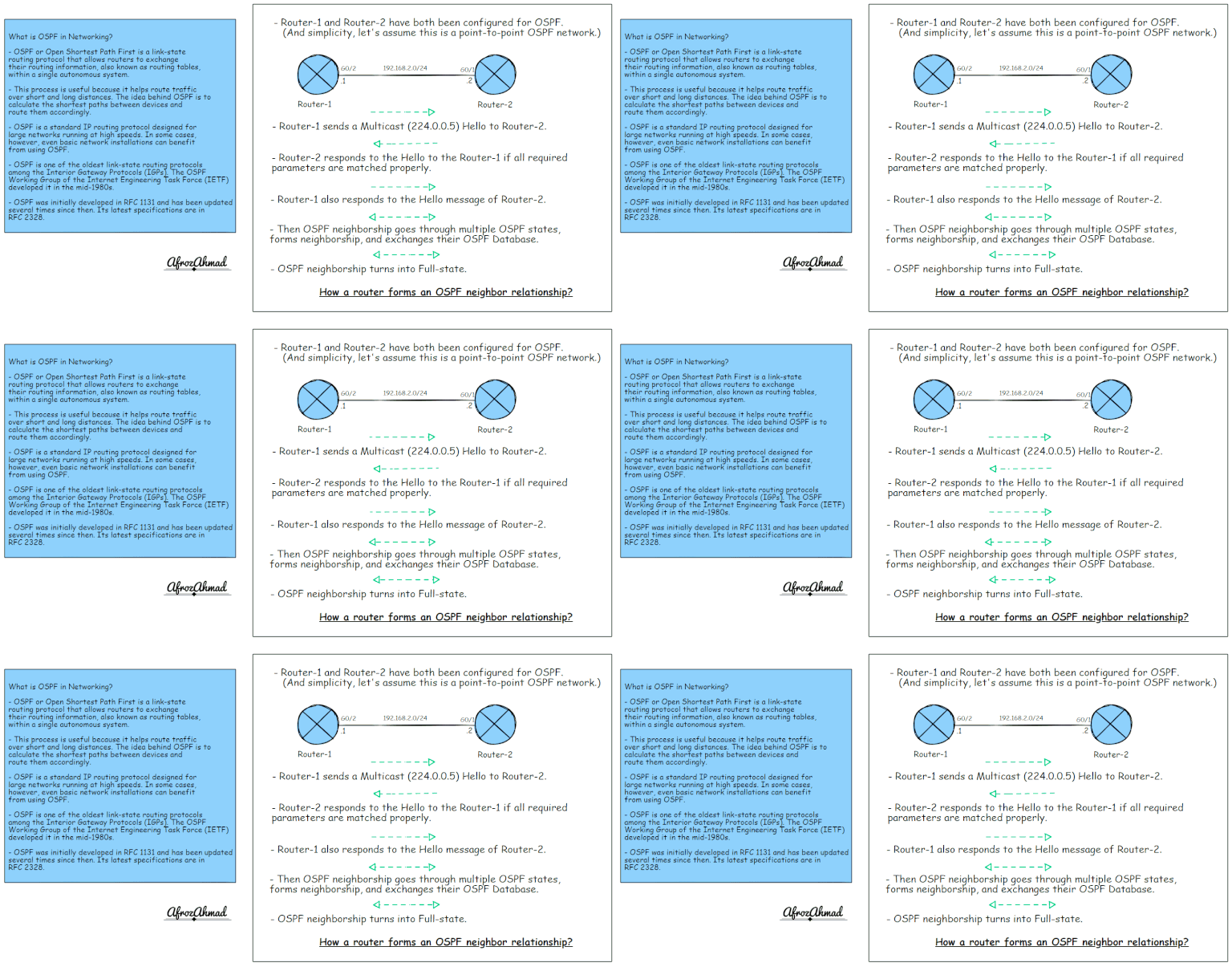
In this article, we’ll discuss What is OSPF in networking and how OSPF works? We will also define its basic concepts, like why and how OSPF forms neighbors, its Pros and Cons, OSPF message format, and its packets. What is OSPF in…

In this post, we’ll define what is Routing Information Protocol or RIP and how it works, and show its pros and cons before diving into details like versions (RIP v1 and v2), timers, update types, and configuration. We will also discuss split…

Routers run different dynamic routing protocols types to update their routing table automatically. Depending on the scale and nature of your network, you might need to use one or more different types of routing protocols explained in this article.