
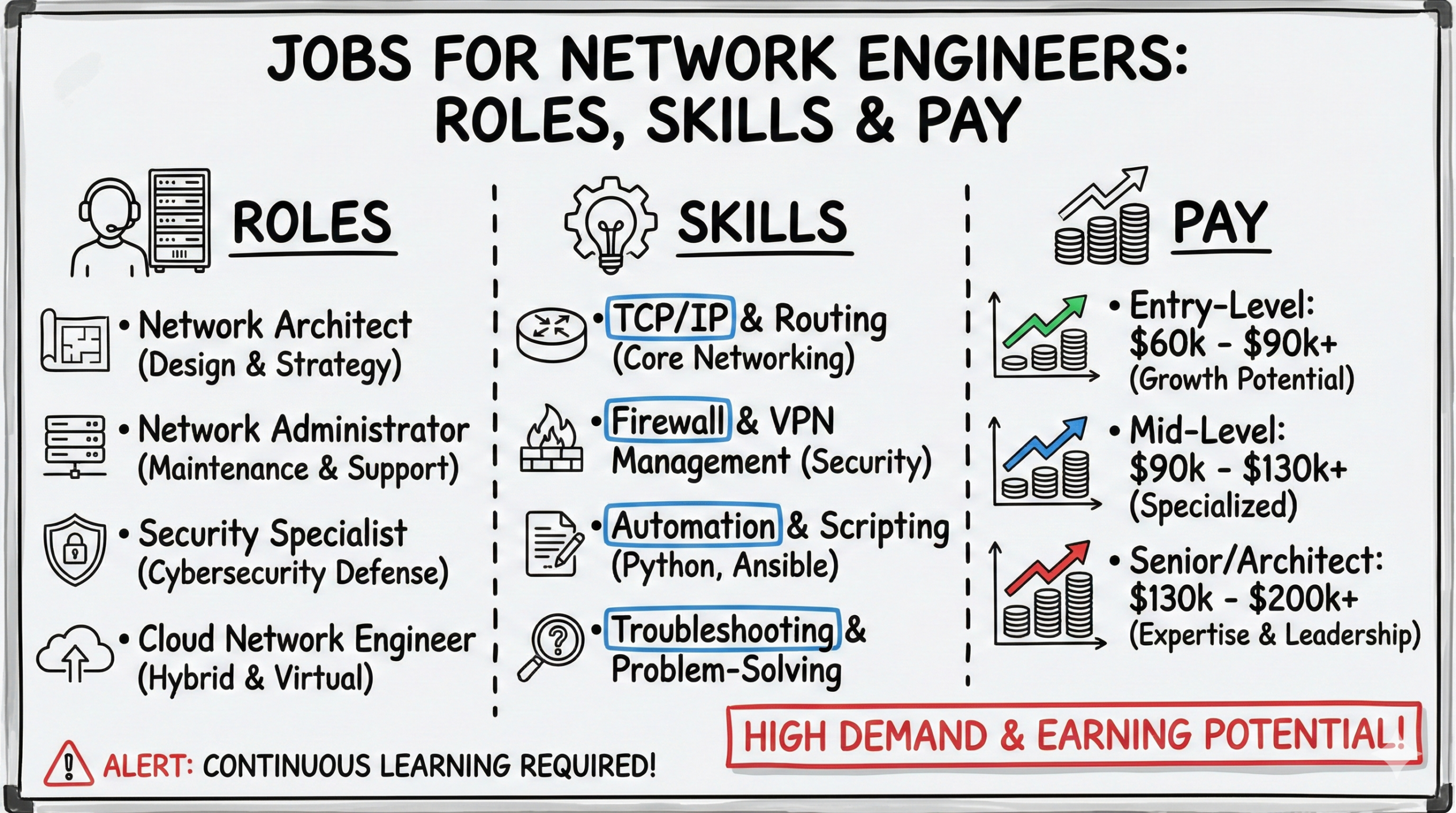
Standing at a career crossroads can feel like staring at a messy wiring closet. There are cables everywhere, blinking lights, and it is not clear which connection leads to a better future. Many people land on searches about jobs for network engineers at that exact moment, trying to decide whether this path is worth the time, money, and effort.
Common questions come up quickly, such as:
- Is this the right field for me?
- How hard is it to break in?
- What kind of network engineer salary can I expect in the US and Canada?
- Which certifications actually matter?
- What skills do employers want for network engineer positions or remote network engineer jobs?
From my view, after more than 18 years in networking and earning my CCIE, this field is stable, in demand, and very rewarding if you enjoy solving problems and building systems that quietly support everything else. There are jobs for network engineers in almost every industry, from hospitals to airlines to finance, plus newer roles in cloud, automation, and network security—platforms like Robert Half list thousands of network engineer jobs across various sectors and specializations.
In this guide, I walk through what a network engineer actually does, common job titles, the network engineer career path, skills and network engineer requirements, the best certifications, real salary ranges, and where network engineer companies are hiring right now. By the end, you should know whether this path fits your goals and the exact steps to take next.
What Is a Network Engineer? (Understanding the Role and Its Importance)

A network engineer designs, builds, maintains, and secures the networks that let devices talk to each other. That includes:
- Office and campus networks (LANs and WLANs)
- Data center networks
- Branch and remote site connectivity
- Cloud networking and VPNs
- Links to the public internet
When people apply for jobs for network engineers, this is the core of what they sign up for.
The job is far more than “keeping the internet on.” On a typical day, I might:
- Plan how data should flow between sites and applications
- Choose routing protocols and high-availability designs
- Set up switches, Wi‑Fi, and firewalls
- Configure VPNs, access rules, and segmentation
- Tune performance and plan safe maintenance windows
Modern network engineer positions mix hardware with software. Besides routers and switches, I work with:
- Cloud networking in AWS, Azure, or GCP
- Network automation tools and scripts
- SD‑WAN platforms
- Monitoring and observability systems
When problems hit, the network engineer is usually the one called to find the root cause quickly so the business keeps running without long outages.
“Simplicity is the key to reliability.”
— Radia Perlman, networking engineer and author of Interconnections
That quote sums up a big part of the job: building networks that are clear, stable, and easy to troubleshoot when something breaks.
Exploring Network Engineer Job Titles and Specializations
When someone searches for jobs for network engineers, they quickly discover a long list of titles. “Network Engineer” is really an umbrella phrase for many roles at different levels and with different focus areas.
Entry-level roles often include:
- Junior Network Engineer
- Associate Network Engineer
- Entry Level Network Engineer
- Network Systems Technician or Network Technician
These roles focus on:
- Basic configuration and monitoring
- Handling support tickets
- Installing gear under supervision
- Learning how a production network behaves
They are a solid starting point for real hands-on skills.
Mid-level roles include titles such as:
- Network Engineer
- Network Administrator
- Network and Computer Systems Administrator
- Network Specialist
- NOC Engineer or Network Operations Engineer
These jobs handle:
- Day-to-day operations and deeper troubleshooting
- Change requests and maintenance windows
- Smaller design tasks and site deployments
In many smaller companies, one person may cover both network and server responsibilities.
Senior roles shift to more design and leadership, such as:
- Senior Network Engineer
- Lead Network Engineer
- Network Engineer Consultant
- Principal Network Engineer
Here, I design architectures, lead upgrades, plan SD‑WAN or data center projects, and mentor junior staff. Strategy and risk management become just as important as command-line skills.
There are also specializations, for example:
- Network Security Engineer or roles in cyber security engineer jobs
- VoIP Engineer or voice engineer for IP telephony and collaboration
- Network DevOps Engineer or Network Automation Engineer using Python, Ansible, and CI/CD
- Wireless engineers focused on Wi‑Fi design and troubleshooting
- Cloud network engineers designing VPCs, hybrid connectivity, and inter-region links
- Field engineers and NOC staff focused on on-site work or centralized monitoring
At the top, network architects and directors set long-term direction, standards, and policies across the entire organization.
The Network Engineer Career Path: From Entry-Level to Leadership

The network engineer career path often starts with internships or help desk roles. As an intern or IT support tech, you might reset passwords, trace cables, and shadow senior staff while learning basic routing, switching, and IP addressing. Many jobs for network engineers list this kind of early exposure as a plus.
A typical path looks something like this:
- IT Support / Help Desk / Intern
- Basic troubleshooting and ticket handling
- Exposure to networking tools and terminology
- Building a foundation in TCP/IP and hardware
- Junior or Associate Network Engineer
- Handling routine tasks and monitoring alerts
- Applying standard configs and change templates
- Working through Tier 1 and Tier 2 network tickets
- Network Engineer / Network Administrator (Mid-Level)
- Designing smaller changes and office moves
- Solving tougher routing, VPN, or Wi‑Fi issues
- Owning projects with clear deliverables
- Senior Network Engineer / Specialist
- Leading migrations (for example, to SD‑WAN or new firewalls)
- Owning major parts of the network design
- Mentoring junior staff and reviewing their work
- Lead / Principal Engineer or Network Architect
- Setting technical standards and reference designs
- Planning capacity and long-term network strategy
- Coordinating with security, systems, and business leadership
Some people choose the management track instead, becoming a manager, Director of Network Engineering, or even VP, where hiring, budgets, and strategy are the main focus. Movement between levels is not perfectly linear; strong skills, certifications, good communication, and visible results can speed up this path.
Essential Skills and Technical Requirements for Network Engineers
When companies post jobs for network engineers, they rarely want only a list of certifications. They look for a mix of solid fundamentals, modern tools, and soft skills that help you work well with others. I think of this as three pillars.
Foundational Technical Skills
Every network engineer needs strong comfort with the basics:
- Routing and switching
- OSPF, BGP, and sometimes EIGRP
- VLANs, trunks, Spanning Tree, and link aggregation
- IP fundamentals and services
- WAN and connectivity
- MPLS and site-to-site VPNs
- IPSec, GRE, and remote-access VPN concepts
Hands-on time with routers, switches, firewalls, and load balancers from vendors such as Cisco, Juniper, or Palo Alto turns theory into real skill. These core skills are the compass you rely on as technology moves forward.
Modern and In-Demand Technical Skills
Modern network engineer requirements go beyond CLI basics. Many jobs for network engineers now ask for:
- SD‑WAN and controller-based designs
- Platforms like Cisco SD‑WAN, Viptela, Versa, or VMware VeloCloud
- Centralized policy, segmentation, and traffic steering
- Security awareness
- Firewalls, VPNs, and access control lists
- Network segmentation and zero trust concepts
- Basic understanding of IDS/IPS and logging
- Cloud networking
- Building VPCs, subnets, and routing in AWS, Azure, or GCP
- Site-to-site and client VPNs to cloud
- Hybrid connectivity between data centers and cloud
- Automation and scripting
- Python or Bash for repetitive tasks
- Ansible or Terraform for configuration management
- GitHub or similar tools for version control and collaboration
- Containers (Docker) for lab work and tooling
Research on the importance of networking as a management skill demonstrates that technical professionals who develop strong networking abilities advance faster in their careers, and these skills show up heavily in network devops engineer and network security engineer roles, helping you stand out even in more traditional positions.
Essential Soft Skills and Professional Competencies

Technical skill gets the interview; soft skills build long-term trust. Strong network engineer companies expect:
- Calm thinking under pressure
During an outage, you need to break down a problem, test theories, and communicate status without panic. - Clear communication
- Explaining issues in plain language to managers and non-technical staff
- Writing change plans and post-incident reviews
- Creating diagrams and documentation that others can follow
- Teamwork and ownership
- Working smoothly with security, systems, cloud, and application teams
- Taking responsibility when changes go wrong and fixing them
- Helping junior staff grow through mentoring and code or config reviews
These skills show up in senior and network engineer consultant roles and make a big difference for promotions and salary growth.
“The most important thing in communication is hearing what isn’t said.”
— Peter Drucker (a reminder that engineers must read between the lines when gathering requirements)
Top Certifications to Accelerate Your Network Engineering Career

Certifications do not replace experience, but they help you stand out when applying for jobs for network engineers. They signal that you understand certain topics and have put in focused study time.
Entry-level certifications:
- CompTIA Network+
- Vendor-neutral coverage of routing, switching, and basic security
- Good for absolute beginners and career changers
- Cisco CCNA
- Deeper focus on Cisco-style routing, switching, and network services
- One of the most requested badges for entry level network engineer roles
Mid-level certifications:
- CCNP Enterprise, CCNP Security, or CCNP Data Center
- Show stronger skills in specific areas
- Valued for roles that own significant parts of the network
- Security-focused certs
- CompTIA Security+ for general security foundations
- Juniper JNCIA/JNCIS or Palo Alto PCNSA for vendor-specific security and routing
- Helpful for network security engineer or cyber security engineer jobs
Expert and cloud-focused certifications:
- CCIE (Cisco Certified Internetwork Expert)
- One of the top networking certifications in the world
- My own CCIE in Enterprise Infrastructure opened doors to advanced design work, ISP roles, and high-end consulting
- Cloud networking certs
- AWS Certified Advanced Networking
- Azure Network Engineer Associate
- Increasingly common in senior jobs for network engineers, especially where data centers and cloud meet
To get real value from certifications:
- Build a home lab or use virtual labs (EVE‑NG, GNS3, vendor sandboxes).
- Take notes and create your own “playbook” from labs and practice exams.
- Combine studying with side projects, like building your own site-to-site VPN or SD‑WAN lab.
Network Engineer Salary: What You Can Expect to Earn in the US
When people ask about jobs for network engineers, pay is near the top of the list. The network engineer salary you can expect depends on experience, city, industry, and specialization, but some common ranges appear across the US.
| Level | Typical Salary Range (US) |
|---|---|
| Entry Level or Junior | $40,000 – $60,000 |
| Mid-Level Network Engineer | $60,000 – $100,000 |
| Senior and Specialist Roles | $100,000 – $120,000+ |
| Architect, Principal, Director Levels | $150,000 and higher |
At the lower end, junior network engineer roles focus on monitoring, basic changes, and learning. Mid-level engineers who handle projects, changes, and complex tickets move into the middle band, especially in bigger cities or high-pressure industries.
Senior staff, network security engineer roles, cloud-focused engineers, and those who automate at scale often cross six figures. With CCIE-level skill and strong experience, architects and directors can reach into the higher band, especially in finance, large tech, or defense.
Key factors that influence your pay include:
- Cost of living in your city or region
- Industry (finance and tech often pay more than education or non-profit)
- Certifications and specialization
- Ability to lead projects and mentor others
Remote work changes the picture as well; many remote network engineer jobs pay big-city rates while allowing people to live in lower-cost areas. From what I see, skills in automation and cloud networking give some of the fastest pay growth over time.
Industries and Companies Hiring Network Engineers
One reason I recommend this field is simple: jobs for network engineers exist in almost every industry. Anywhere data needs to move safely and quickly, a network engineer or network specialist is close by.
Common sectors that hire network engineers include:
- Technology and telecom
- Vendors and ISPs
- Data center providers and content delivery networks
- Cisco network engineer roles, backbone engineers, and NOC staff
- Finance and insurance
- Banks, trading firms, and payment processors
- Heavy focus on secure, low-latency networks
- Transportation and logistics
- Airlines, shipping, and delivery companies
- Real-time tracking of planes, trucks, ships, and cargo
- Healthcare
- Hospitals, clinics, and imaging centers
- Strong security and reliability for medical records and devices
- Government, defense, and education
- Large campuses and multi-site networks
- Often stable, long-term employment once you are in
- Managed Service Providers (MSPs) and consulting firms
- Engineers work across many client environments
- Great exposure early in a career to a wide range of designs and tools
In short, if an organization relies heavily on data and connectivity, there is a good chance it has network engineer positions behind the scenes.
Finding Network Engineer Jobs: Work Models and Job Types

When someone searches for jobs for network engineers, the work style matters almost as much as the title. The good news is that there are more options than before.
Common work models:
- On-site roles
- Common in data centers, some government or healthcare environments
- Typical for NOC engineer, Network Systems Technician, or field engineer positions
- Often the best for early-career learning, since you can see and touch the equipment
- Hybrid roles
- Split between home and office
- Common for project, design, and senior engineering roles
- Balance of focus time at home and collaboration on site
- Remote network engineer jobs
- Design, configuration, automation, and much troubleshooting over VPN and remote access
- A strong fit for network devops engineer and cloud-focused roles
- Reward people who are organized, self-driven, and good at written communication
Job types also vary:
- Full-time roles with salary and benefits
- Contract roles paid hourly, often for upgrades or migrations
- Part-time roles for people balancing other duties or side work
- Internships and graduate programs as a first step into jobs for network engineers
From my view, early in a career, on-site or hybrid roles provide the fastest growth in practical skills, while remote work can be ideal once you are more independent and confident troubleshooting on your own.
Tip: Keep a simple “network diary” where you write down outages, root causes, and fixes. This helps in interviews and speeds up your learning more than you might expect.
Conclusion
Network engineering offers a steady, well-paid career for people who enjoy problem solving and building the “roads” that data travels on. Across industries, there are many jobs for network engineers, from entry level to architect, with room to move into security, cloud, or automation over time.
Key takeaways:
- Strong fundamentals in routing, switching, and TCP/IP come first.
- Modern skills in SD‑WAN, cloud networking, and automation raise your value.
- Soft skills like clear communication and calm work during incidents separate good engineers from great ones.
- Certifications such as CCNA, CCNP, and CCIE can speed up the network engineer career path and open interviews that might not appear otherwise.
If you are serious about this field, focus on steady study, hands-on labs, and small side projects that stretch your skills. On AfrozAhmad.com I share guides, interview questions, and courses that turn complex topics into straight, practical steps. The networks built and managed by engineers support hospitals, banks, schools, and homes, so this work truly matters.
FAQs
Question: What Qualifications Do I Need To Become a Network Engineer?
Most employers prefer a bachelor’s degree in Computer Science, Information Technology, or a similar field, but it is not a strict rule. A strong base in TCP/IP, routing, switching, and subnetting matters more.
Entry-level certifications like CompTIA Network+ or CCNA raise your chances of landing jobs for network engineers. Hands-on labs, home labs, and internships help a lot, even for people without formal degrees. A small project list—such as building a home lab, setting up a VPN, or designing a Wi‑Fi network—can also impress hiring managers.
Question: How Long Does It Take To Become a Network Engineer?
With focused effort, you can learn the basics and pass CCNA in about three to six months. Getting that first entry level network engineer or support role often takes six to twelve months, depending on the market and your effort.
Reaching mid-level skill usually takes two to four years of daily practice. Growing into senior network engineer or architect roles often takes five to ten years, though strong skills, certifications, and solid communication can speed this path.
Question: Is Network Engineering a Good Career in 2025 and Beyond?
Yes, it is one of the more stable and well-paid paths in IT. As more services move online and into the cloud, the number of jobs for network engineers remains strong. New areas such as SD‑WAN, 5G, IoT, and automation create fresh roles every year.
Remote work and security needs also keep demand high. Because networks sit under almost every business service, companies are very careful about cutting this area too deeply, even during tough times.
Question: Can I Work as a Network Engineer Remotely?
Yes, many network engineer positions are now remote or hybrid. Design, configuration, network engineer consultant work, and a lot of troubleshooting can be done from home over secure access.
Some roles, like field support or data center work, still require on-site time for hardware tasks. Job boards show a clear rise in remote network engineer jobs, especially for cloud, automation, and security-focused roles. Remote work rewards people who communicate clearly, stay organized, and manage their time well.

- pfSense 10G Home Lab Setup: Complete Hardware Guide (2026) - April 1, 2026
- Best Budget Home Lab Setup Under $300 (2026): Complete Starter Stack - March 30, 2026
- Best Modems for Spectrum: Top DOCSIS 3.1 Picks That Actually Work - March 28, 2026